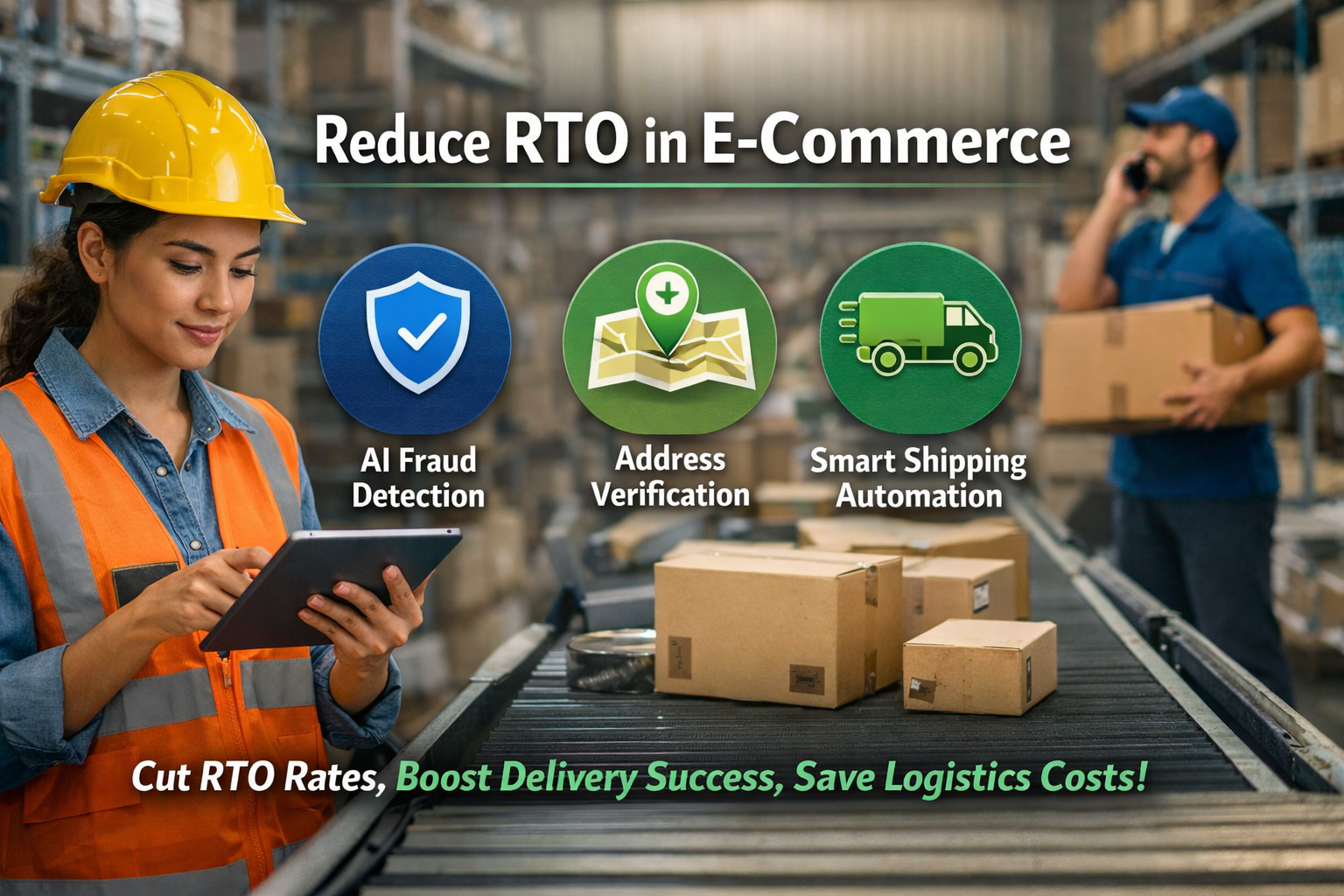
Reducing RTO is crucial for Indian e-commerce. India’s D2C market sees COD orders at ~60–70% of sales and apparel RTO rates up to 20–25%. Each return-to-origin order roughly doubles the shipping cost, so cutting RTO can greatly boost margins. Below are five proven strategies. We’ll show how streamlined address checks, smart courier allocation, proactive communication, automation, and integrated shipping platforms (logistics aggregators) work together. In practice, using a centralized shipping aggregator like OrderzUp (an AI-driven platform) ties all these tactics together to reduce your RTO in E-commerce/ to slash RTOs.
Reduce RTO in E-commerce
- Validate Customer Addresses at Checkout: Typos in addresses cause many RTOs. Use address-autocomplete or postal-code APIs so buyers fix mistakes instantly (e.g. pin code vs. city mismatches). AI tools can flag impossible combinations on the spot. One study found confirming addresses right after order placement prevents ~40% of returns. Always prompt customers via email/WhatsApp (“Is this address correct?”) to catch errors early. OrderzUp’s own guidance emphasizes accurate addresses “prevent failed deliveries” and return-to-sender issues. Tight address hygiene (autocomplete fields, address books, instant confirmations) is a simple, high-impact step to reduce RTO.
- Use AI-Driven Courier Selection: Not all couriers perform equally by region. Modern shipping platforms use AI to match each order with the best carrier. For example, if Courier A succeeds 95% in Delhi but only 80% in rural areas, an AI model learns this and routes parcels accordingly. Dynamically allocating each shipment to the top performer greatly improves delivery success. Research shows AI-based carrier selection “optimizes shipments, ensuring timely and cost-effective deliveries”. In practice, brands that route orders to the most reliable couriers see a significant drop in failed delivery attempts. Intelligent routing like this (a core feature of leading courier aggregators) means smoother delivery runs and lower RTO.
- Communicate Proactively and Enable Rescheduling: Most returns happen due to simple communication gaps. Implement proactive pre-delivery confirmations. Send automated reminders 24 hours and again before shipping (via WhatsApp, SMS or email) so customers can confirm or reschedule. For example, a WhatsApp message “Tap here to confirm today’s delivery or pick a new date” can let the buyer adjust if needed. Industry data shows a single reminder can reduce no-delivery RTO by ~20%. After a first failed attempt, automate the Non-Delivery Report (NDR) workflow. Instantly notify customers (“Your order was undelivered. Is your address [XYZ]? Reply to reschedule.”) and offer one-click actions. Tools like OrderzUp, Shiprocket and others do exactly this to recover lost orders. In one example, automating NDR follow-ups cut RTO by ~30–45%. The bottom line: keep customers in the loop with easy confirm/reschedule options to salvage orders before they return.
- Automate NDR Handling and Workflows: Despite all checks, some deliveries will fail. The key is rapid resolution. Use automated NDR management to slash fallout. When a delivery fails, trigger the right response automatically. For example, if the reason is “address not found,” instantly email the customer to correct details; if “customer refused,” send a quick verification OTP. AI chatbots can even call recipients to reconfirm or reschedule after a failure. According to industry data, automating NDR handling can cut failed deliveries by ~30%. Implementing these instant fixes (e.g. giving options “Accept at concierge / update address / choose new date” right after a failure) dramatically cuts RTO volume. Brands using smart NDR automation report ~30–45% fewer returns. In summary, an automated workflow ensures failed delivery attempts are quickly recovered instead of turned into losses.
- Leverage an Integrated Shipping Aggregator: The final step is to tie it all together with a unified logistics platform. A shipping aggregator bundles address validation, AI courier assignment, notifications, and analytics in one dashboard. For example, OrderzUp – an AI-driven courier aggregator – integrates all these strategies. It even markets itself as the “best shipping aggregator in India”. OrderzUp uses AI for courier selection, pre-validates addresses, and flags risky COD orders to cut RTO. Other platforms (Shiprocket, Delhivery, etc.) offer similar modules. The advantage is clear: by using a single logistics aggregator for D2C orders, you ensure no step is missed. The aggregator automatically pre-screens orders with risk scores, verifies details, automates follow-ups, and recommends the optimal courier. Small brands benefit too: start by enabling the key modules (address checks, WhatsApp confirmations, etc.) on such a platform and scale from there. In short, an AI-driven shipping aggregator turns all the above tips into a turnkey solution. As experts note, these integrated tools make reducing RTO almost automated.
Why use a shipping aggregator like OrderzUp?
A shipping aggregator unifies all RTO-prevention tactics. Instead of juggling separate tools, an aggregator like OrderzUp handles address checks, COD verifications, rescheduling prompts, and smart courier routing on one platform. This centralization means fewer human errors and faster automated fixes. OrderzUp, for example, offers AI-based features across all zones, making it easier for sellers to reduce returns without extra manual work.
How do customer confirmations (WhatsApp/SMS) reduce RTO?
Pre-delivery confirmations ensure customers are aware of impending shipments. A quick WhatsApp or SMS prompt (“Confirm today’s delivery or pick a new date”) alerts them and lets them reschedule if needed. This simple step addresses “no one home” issues. Data shows that such reminders cut no-delivery RTOs by ~20%. It’s an easy way to prevent returns due to scheduling problems.
What are the top courier aggregators in India for e-commerce?
Leading courier aggregators include OrderzUp, Shiprocket, and Shipyaari. OrderzUp is often highlighted as one of the best shipping aggregators in India. These platforms offer broad courier networks plus smart features (address validation, COD fraud checks, etc.). Choosing a top aggregator ensures your orders are routed optimally and risky shipments are caught early, helping reduce RTO.
How can I choose the right shipping aggregator for my online store?
Look for an aggregator that has AI-driven features and real-time tracking. Key factors include automated address verification, dynamic courier allocation, and built-in COD checks. Also consider coverage: top services have the widest delivery networks in India. OrderzUp, for instance, advertises broad Pin code coverage and multiple courier partners. Compare platforms on these features and pick the one that integrates seamlessly with your store (Shopify, WooCommerce, etc.) and addresses your main pain points (like RTO).