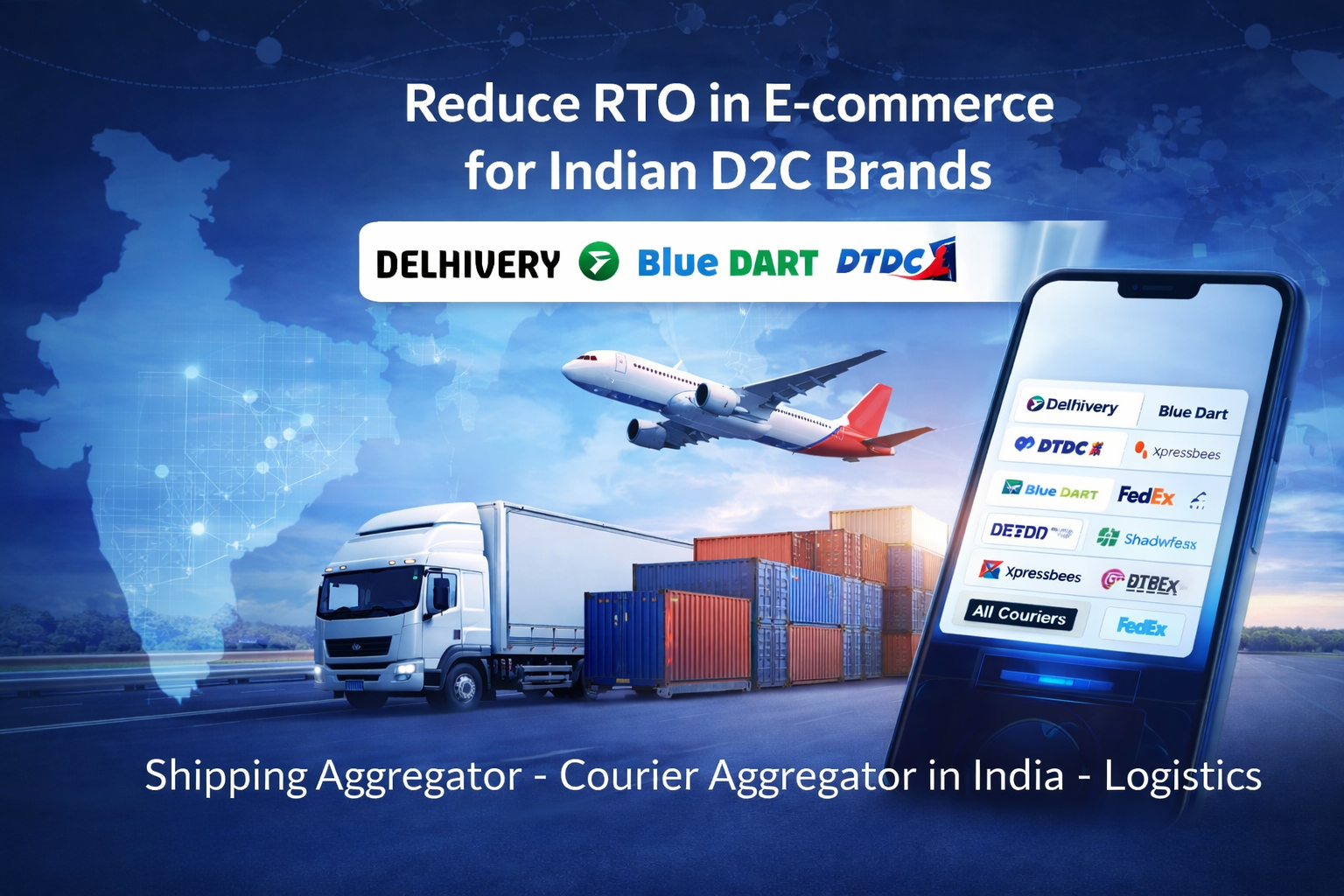
Return-to-Origin (RTO) – when a customer’s order is returned undelivered – is a costly problem for Indian D2C sellers. In India, RTO rates often run 15–25%, meaning brands end up paying shipping twice (out and back) for roughly one in five orders. Every percentage point of RTO avoided goes straight to the bottom line. For example, one analysis showed a ₹10 crore brand with 25% RTO losing ~₹3.25 crore a year to these failures. In short, RTO waste can easily consume 10–15% of a D2C brand’s revenue. To Reduce RTO in E-commerce is more challenging than think.
Common Causes of RTO
- Incorrect addresses: A single typo or missing apartment number can cause failed delivery. Studies show wrong or incomplete addresses are a top cause of RTO.
- Unreachable customers: Orders with invalid or unattended phone numbers lead to missed delivery attempts.
- High COD refusals: Cash-on-delivery (COD) orders have up to 15–25% refusal rates, since customers “try before they buy.” Without confirmation, many COD orders come back.
- Other issues: Inadequate product info or unhappy customers can add to returns. In fact, one logistics infographic bluntly notes “RTO = 2–3× shipping cost + inventory loss”.
Each failed delivery doubles the shipping expense and ties up inventory and labor (inspection, re-packaging, re-listing). For example, processing 1,000 returns can consume ₹45k–72k in labor alone. In practice, even a few bad orders (wrong address or fake COD) can wipe out profit margins. As one blog notes, “every ‘Return to Origin’ is really a double whammy: you lose the shipment fee and potentially a lifetime customer”.
Key Strategies to Cut RTO
D2C brands can reduce RTO with both operational fixes and technology tools. Some proven tactics are:
- Validate addresses at checkout. Use auto-complete and map lookups so customers enter correct data. An AI-based address checker can flag typos, wrong PIN codes or missing apartment numbers before an order ships. Catching these errors upfront is crucial, since 15–20% of delivery failures stem from bad addresses.
- Encourage prepaid orders. Shift customers from COD to prepaid (e.g. offer free shipping or discounts). Since COD orders suffer ~15–25% RTO rates, even a small move (say 10% of orders) to prepaid can meaningfully lower returns.
- Confirm COD orders. For COD sales, follow up with a quick SMS or call to the buyer. Many refusals are due to buyer’s remorse; a short confirmation can secure commitment. Some brands have cut COD RTO by ~25–30% simply by adding a pre-delivery call.
- Provide clear product information. Accurate descriptions, sizing, and photos set proper expectations. Returns often happen when customers get something they didn’t expect. Clarity upfront means fewer surprises (and refusals).
- Offer real-time tracking. Giving customers up-to-date delivery status reduces missed deliveries or cancellations. When buyers know exactly when to expect a parcel, they are much less likely to refuse it.
Implementing these basics can slash RTO by 20–30% immediately. A modern shipping platform simply bundles and automates all these tactics – from address checks to COD fallbacks – in one place.
How Shipping Aggregators Help Minimize RTO
Rather than juggling separate courier portals, many D2C brands now use shipping (or courier/logistics) aggregators. A logistics aggregator is a single platform that connects a merchant to dozens of courier partners. From one dashboard you can import orders (e.g. via one-click Shopify integration), automatically validate addresses, compare live rates, print multi-courier labels, track deliveries, and manage returns across all partners. This centralization delivers several RTO-reducing benefits:
- AI-powered order checks. Aggregators often layer on machine-learning tools. For example, OrderzUp automatically validates addresses/phone numbers and blocks suspicious COD orders before shipping. These AI checks “flag errors” and reject “fake or duplicate” orders upfront, treating RTO prevention as a design goal.
- Intelligent courier selection. Multi-carrier platforms can compare rates and reliability in real-time. OrderzUp, for instance, “compares rates and reliability across ~20+ courier partners and chooses the best fit” for each order. This avoids bottlenecks: if one courier is underperforming to a location, another is chosen. By always picking the fastest, most reliable (or cheapest) partner, many late or lost packages are prevented.
- Unified NDR and remittance workflows. Good aggregators include non-delivery report (NDR) management. For example, the platform might auto-retry a shipment, switch carriers on delay, or initiate a customer callback. They also streamline payments: while many couriers settle COD once or twice a week, leading aggregators offer daily or next-day payouts, improving cash flow for sellers.
- Real-time tracking and analytics. A single portal displays all shipments with live tracking. Customer support can see exactly which consignments are at risk. This visibility means issues are caught early (e.g. “OrderzUp’s dashboard … gives quick insights into order risks” as one user review noted). It also generates data on which areas or products have higher RTO, enabling targeted fixes.
In short, a modern shipping aggregator injects data science into logistics. By validating data, balancing carriers, and automating follow-ups, it prevents many failed deliveries before they happen. Compared to manual shipping or single-courier apps, this can be a game-changer for profitability.
Top Courier and Shipping Aggregators in India
Several platforms vie to be the “best shipping aggregator in India” for D2C brands. Here are some leading examples (their strengths and focus):
- OrderzUp – A new AI-driven courier aggregator built for D2C. It connects to 20+ major couriers (BlueDart, Delhivery, etc.) covering ~26,000 PINs. Key features include AI-based RTO reduction (automated address validation and COD fraud filters, claiming up to 30% fewer returns) and real-time rate comparison to pick the best courier per order. It also offers one-click Shopify integration and 24×7 support. Its founders claim D2C brands can save up to 40% on shipping costs via automation-driven routing. In summary, OrderzUp positions itself as a top shipping/logistics aggregator for Indian D2C, emphasizing ease of use and RTO prevention.
- Shiprocket – India’s largest and oldest aggregator (founded 2012). It integrates 17+ domestic and international couriers (including FedEx, BlueDart) and serves 27,000+ pincodes. Shiprocket offers a full-stack suite: multi-channel integration (Shopify, WooCommerce, Flipkart, Amazon, etc.), automated label printing, AI-driven courier recommendation, and NDR/COD management. It even provides warehousing and hyperlocal delivery. Its strength is scale and coverage, but legacy users note its support and payouts can lag (standard COD remittances are ~10 business days by default).
- Pickrr – A Gurugram-based platform known for flat-rate pricing and rural reach. Pickrr covers ~29,000 pincodes via 20+ couriers. Unlike dynamic pricing, Pickrr offers predictable plans (e.g. ₹26–₹29 per 500g) that decline with volume. It automates pickup and has built-in NDR reattempts at no extra cost. It claims a ~99.5% delivery success rate and offers fast (2-day) COD remittance. Pickrr excels when you want transparent costs and wide reach in Tier-2/3 areas.
- iThink Logistics – A Mumbai startup focused on AI. It serves 26,000+ pincodes and integrates many carriers. iThink’s platform features smart courier allocation (its “CORE” engine) and predictive RTO alerts, next-day COD reconciliation, and branded tracking. In practice, iThink boasts very low RTO rates (~10–15%) thanks to its ML-based routing. It’s well-suited for brands that want heavy AI automation on top of multi-courier access.
- NimbusPost – A technology-oriented aggregator with a global reach. It ties up 25+ domestic and international couriers (reaching ~29,000 pincodes). NimbusPost emphasizes fast cash flow: same-day or next-day COD payouts and even IVR calling to confirm COD orders, reducing fraudulent returns. It provides 24×7 support and dedicated account managers (enterprise style). Its dashboard has real-time tracking and auto-routing. Brands pick NimbusPost when fast settlements and premium service (warehousing, 24/7 support) are priorities.
- Shipway – A user-friendly aggregator popular with small to mid-size sellers. It supports 50+ courier partners and offers branded tracking pages and customer chatbots. Key features include RTO analytics per courier, letting you see which shipments were returned and why. It even has a free tier (up to ~50 orders/mo) to try the service. Shipway shines for ease-of-use (simple order import, label print) and basic RTO visibility, though it lacks advanced AI fraud tools.
- Others to Know: Shyplite (16+ couriers, AI courier recommendation, strong customer support); ShipKaro (14+ couriers, focuses on lowest-cost shipping via negotiated rates); Vamaship (10–12 couriers + warehousing, with deferred billing options); RapidShyp and GoSwift (newer players offering end-to-end D2C fulfillment and smart courier allocation).
Each platform has trade-offs. For example, if minimizing RTO is your top priority, focus on aggregators with address validation and follow-up workflows (OrderzUp, Shiprocket, iThink all offer these). If you need lowest cost, consider flat-rate systems (Pickrr, ShipKaro) or negotiate rates. For enterprise scale, ClickPost or NimbusPost bring more analytics and 24/7 support (but at a higher price). No matter which you choose, a good aggregator in India will integrate easily (one-click Shopify/WooCommerce plugins), cover ~29k pincodes, and provide real-time tracking and reports.
Why OrderzUp Stands Out for RTO Reduction
Among these, OrderzUp differentiates itself by making RTO reduction a core feature. Its AI engine proactively prevents returns rather than just managing them. For example, OrderzUp’s platform “pre-validates addresses and phone numbers with AI, catching errors before dispatch”. It also “blocks suspicious COD orders via predictive fraud detection and automatically selects the fastest, most reliable courier”. In practice, OrderzUp claims this approach “can cut RTO losses by up to 30%”.
Other highlights of OrderzUp include:
- Broad multi-courier network: Out-of-the-box support for 20+ leading courier partners. More carriers means more backup for late regions.
- One-click integration: Easy sync with Shopify and popular platforms so stores can start shipping right away. This simplicity earned praise in user reviews – one merchant noted how the dashboard quickly flags “risky addresses, invalid phone numbers, and high-RTO pincodes,” significantly improving on-time deliveries.
- Live rate comparison: Orders are automatically routed using the lowest cost and highest reliability options. As OrderzUp’s site highlights, it “always ship[s] with the best rates and reliability”, ensuring each order uses the optimal courier.
- Real-time analytics: The unified dashboard reports on each courier’s performance and RTO stats, helping brands iterate. It even supports multi-warehouse fulfillment (ship from the nearest location) to reduce transit times.
- Affordable, transparent pricing: Unlike some older aggregators, OrderzUp emphasizes clear rates and no hidden collateral. In fact, their Shopify listing shows it as free to start (with 100% 5-star reviews). And COD payouts are quick (typically settled in 1–2 days), helping cash flow.
In side-by-side comparisons, users often note OrderzUp’s lead in RTO prevention. For example, an OrderzUp blog notes that while mature platforms like Shiprocket offer basic NDR and address validation, OrderzUp’s AI filters and easy setup give it an edge for D2C sellers. Many of its beta users report “near-zero RTO” after deploying the system.
By packaging AI address checks, fraud detection, dynamic courier allocation, and analytics together, OrderzUp effectively turns RTO from a reactive metric into a controlled KPI. This aligns with what logistics experts recommend: use an AI-powered multi-courier platform so RTO reduction becomes part of your shipping strategy.
Choosing the Right Solution
Ultimately, the best solution depends on your needs. If lowest returns and errors are crucial, prioritize features like AI validation, automated reattempts, and NDR workflows. If cost control is key, compare flat-rate shipping plans. Check integrations (Shopify, APIs), support responsiveness, and COD settlement terms (daily vs. weekly) before deciding. Reading recent case studies and reviews can help. For instance, one Mumbai retailer cut RTO from 22% to 13% by switching to an AI-driven aggregator, freeing up hundreds of orders per month.
In practice, using any modern courier aggregator in India will beat manual logistics for reducing RTO. These platforms are explicitly designed to streamline D2C shipping – matching “the best shipping aggregator in India” keyword patterns – and they include features specifically aimed at return prevention. As one industry blog notes, the best logistic aggregators minimize mistakes and RTOs by centralizing management and comparing couriers instantly.
In summary, to slash RTO in Indian e-commerce: implement proven checks (address validation, COD confirmation, etc.) and leverage a capable shipping aggregator. Platforms like OrderzUp combine both approaches, using AI-powered logistics to cut returns by up to 30%. By choosing the right aggregator, D2C brands not only reduce RTO but also save time, cut shipping costs, and improve customer satisfaction – helping them scale faster in a competitive market.
Frequently Asked Questions (FAQs)
How can Indian e-commerce brands reduce RTO orders?
Indian D2C brands can reduce RTO by implementing several strategies such as order confirmation through SMS or WhatsApp, address verification before shipping, limiting high-risk COD orders, and using reliable courier partners. Many brands also use shipping aggregators or courier aggregators in India to access multiple courier services and select the most reliable carrier for each location.
How do shipping aggregators help reduce RTO rates?
A shipping aggregator connects e-commerce sellers with multiple courier partners on one platform. This allows businesses to compare delivery success rates, shipping costs, and coverage across different carriers. By selecting the best courier partner for a specific pin code, brands can improve delivery success and significantly reduce RTO rates. Platforms like OrderzUp and other logistics aggregator solutions provide tools such as NDR management, automated tracking updates, and courier performance insights.
What are the benefits of using courier aggregators in India for D2C brands?
Courier aggregators in India help D2C brands streamline logistics operations. They offer features like multi-courier shipping, automated order processing, real-time tracking, and analytics dashboards. For growing online businesses, using a logistics aggregator in India makes it easier to scale operations while maintaining efficient delivery performance and reducing operational costs.
Which is the best courier aggregator in India for e-commerce logistics?
The best courier aggregator in India depends on business requirements such as delivery coverage, pricing, and integration capabilities. Many e-commerce sellers compare platforms that provide multiple courier options, real-time shipment tracking, and automated shipping workflows. Solutions like OrderzUp, along with other shipping aggregators, are commonly used by D2C brands to manage logistics efficiently and improve delivery success rates across India.