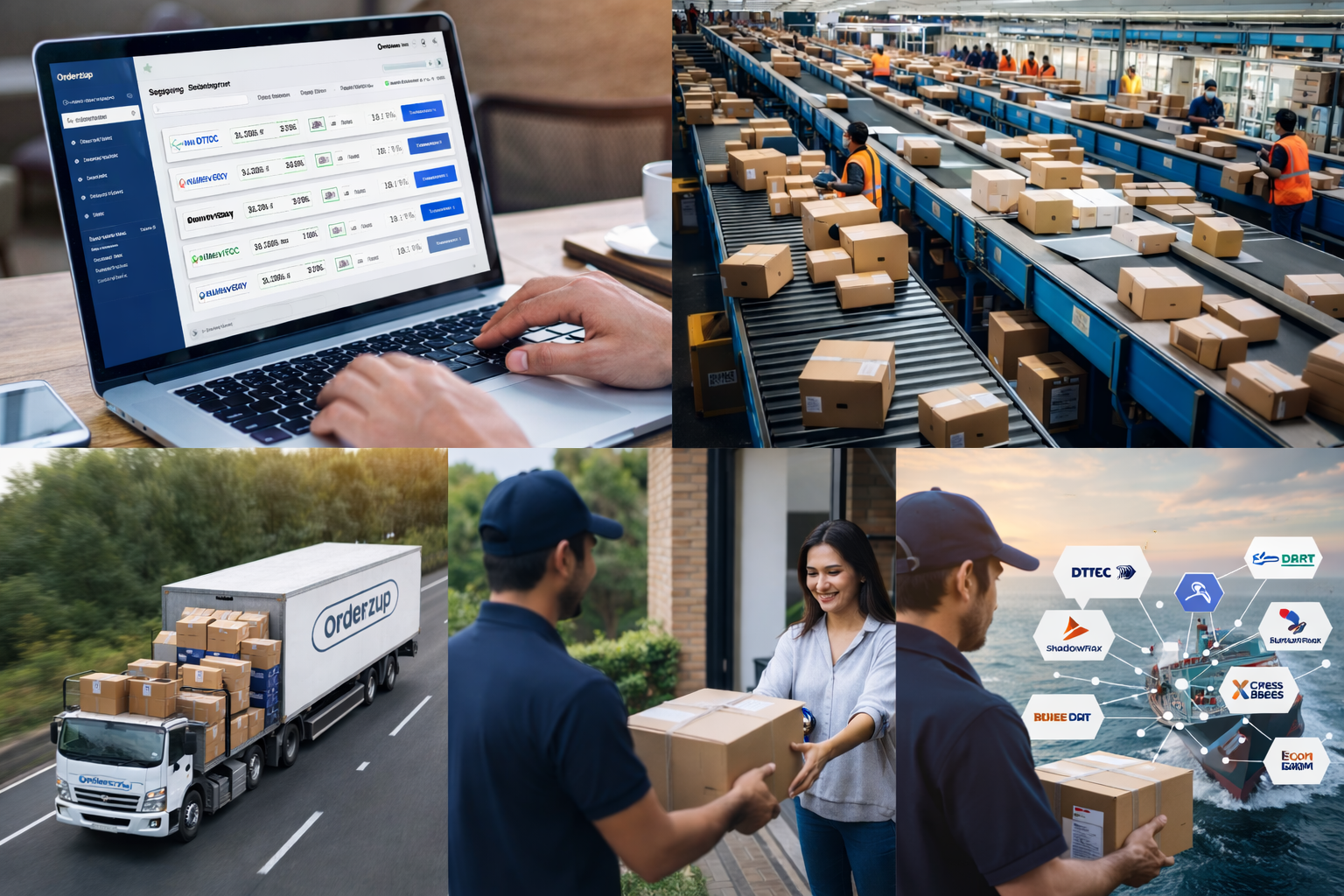
Shipping aggregators (also called courier aggregators or logistics platforms) let e-commerce and D2C sellers manage multiple courier partners through one dashboard. Instead of signing separate contracts with Delhivery, BlueDart, FedEx, etc., you integrate once and the platform automates rate comparisons, label printing, pickups, tracking, COD payouts, and returns. To find best for Shipping in India might be tough but it’s not impossible. There are couple of benefeits . This saves time and cost – top Indian aggregators cover ~25–29K+ PIN nationwide, far beyond any single courier. In this landscape, OrderzUp – a new AI-driven platform – is positioning itself as the industry leader. It boasts features like address validation, predictive RTO reduction, and one-click Shopify integration, which we compare below against established players.
OrderzUp: India’s AI-Driven Shipping Aggregator
OrderzUp (founded 2024) is built specifically for D2C brands, combining multi-courier shipping, order management, and fraud prevention under one AI-powered roof. According to OrderzUp, its platform integrates ~20+ leading couriers (e.g. BlueDart, Delhivery, XpressBees) covering ~26,000+ PIN codes. Key features include: AI-driven RTO reduction (it automatically validates addresses and flags risky COD orders – up to 30% fewer returns), automated carrier selection (real-time rate comparison to pick the cheapest/reliable courier per order), fast COD payouts (typically settled in 1–2 days), and seamless store integration (one-click sync with Shopify and other platforms). OrderzUp also emphasizes transparent pricing, 24×7 support, and built-in analytics. The company claims D2C brands can save up to 40% on shipping costs using its multi-carrier, automation-driven approach. In short, OrderzUp positions itself as the best shipping aggregator in India (2025–26) by blending broad courier coverage with smart automation.
Leading Shipping Aggregators (Competitors)
Several established platforms compete in India’s shipping aggregator space. The table below summarizes key competitors, their reach and specialties (see sources):
- Shiprocket (est. 2012) – One of India’s oldest and largest aggregators, Shiprocket integrates ~17–42+ courier partners (FedEx, Aramex, BlueDart, etc.) and serves over 27,000+ PIN codes. It offers multi-channel integrations (Shopify, WooCommerce, Flipkart, Amazon, etc.) and tiered pricing plans (Lite/Pro/Enterprise) with volume discounts. The platform includes a rate calculator, automated label/invoice generation, pickup scheduling and a unified tracking dashboard. Standard COD remittance is ~10 business days (thrice-weekly), though Shiprocket offers a premium 2-day COD plan for an extra fee. Shiprocket is known for its broad courier network and stability, but it has less emphasis on AI – most RTO management is manual or basic NDR handling. (User reviews note slower support and fewer smart fraud-prevention tools than newer entrants.)
- NimbusPost (est. 2018) – A technology-focused aggregator, NimbusPost ties up 27+ domestic and international couriers to reach ~29,000+ PIN codes. Its strength is automation and cash flow: for example, NimbusPost advertises next-day COD remittances and even automated cloud-calling to confirm orders and cut fake CODs. The platform provides an advanced shipping dashboard with real-time rate quotes, instant comparisons, and detailed analytics. It also offers 24×7 chat and dedicated account managers for support. This makes NimbusPost popular with fast-growing D2C brands that need wide reach and fast settlements. (On the flip side, its enterprise-grade features may be overkill for very small sellers, and all features—like next-day COD—may vary by region.)
- Pickrr (est. 2015) – Pickrr is known for affordable flat-rate pricing and strong reach into rural India. It partners with ~20+ couriers covering ~29,000+ PIN codes. Its main selling point is transparent flat shipping plans (e.g. ₹26–₹29 per 500g, declining with volume). Pickrr handles pickups automatically and has an integrated returns/NDR system that reattempts failed deliveries at no extra cost. It also provides branded tracking pages and an analytics dashboard, claiming ~99.5% delivery success rate. COD payouts are relatively fast: its standard plan settles in ~2 days. Pickrr’s network is slightly smaller than Shiprocket/Nimbus, but it excels in cost predictability and rural coverage.
- Shyplite (est. 2016) – Shyplite works with ~16+ couriers and covers ~25,000+ PIN codes. It offers an AI-driven courier recommendation engine, suggesting the optimal carrier based on cost, speed, and success probability. The platform provides a unified interface for label printing, tracking, invoices, and customer notifications. Shyplite is often praised for attentive customer support (dedicated managers, phone/chat help). However, its COD settlement is slower (typically weekly payouts) and it does not highlight advanced fraud-prevention features like OrderzUp does. Shyplite suits established small/mid-size brands that value ease-of-use and service quality over cutting-edge tech.
- Vamaship (est. 2015) – Vamaship combines courier aggregation with warehousing and fulfillment services. It offers 10–12 domestic courier partners across ~27,000+ PINs. Its platform includes unique logistics features: flexible multi-carrier routing, inbound quality checks on returns, and pay-as-you-go rate cards. For example, Vamaship boasts quality inspection of returned items before restocking. It also provides deferred billing options for large sellers (invoice after delivery). These enterprise-grade solutions make Vamaship a good fit for mid-market D2C brands seeking an all-in-one logistics partner with in-house warehousing. Smaller sellers may find its dashboard and policies too complex, and its COD payouts are on the slower side (weekly settlements).
Each of these platforms strives to rank high in searches by targeting key phrases (e.g. “shipping aggregator,” “courier aggregator in India,” “best courier aggregator”) in their content and titles. For instance, Shiprocket’s blog headline “Top 7 Courier Aggregators in India (2026)” explicitly uses relevant keywords, and the article lists and compares each player by name. NimbusPost and other competitors similarly publish guides on “Best Shipping Aggregators” or “Shipping Solutions for D2C” to capture search traffic. These posts are thorough – using numbered sections, bullet lists, comparison tables and FAQs – to answer common user queries. Shiprocket’s blog even includes a comparison table summarizing each platform’s partners, coverage and COD terms. Many aggregator sites also add FAQ sections at the end of articles (addressing questions like “What is a courier aggregator?” or “Which shipping aggregator offers fastest delivery?”) to target featured snippets. This SEO content strategy – updated, keyword-rich guides – helps competitors rank for “best shipping aggregators in India” and related queries.
Analysing their SEO, we see that top shipping platforms publish content around our target keywords: “shipping aggregator,” “best shipping aggregators in India,” “courier aggregators,” “logistics aggregator for D2C brand,” etc. They often include the current year (2025/2026) in titles for freshness. Content is optimized with headings and bullet lists (e.g. Shiprocket’s “List of Top 7 Aggregators”). Many of the articles include Google’s People-Also-Ask questions or sample queries as headings, then answer them in detail. For example, OrderzUp’s own blog answers “Which is the best shipping aggregator in India (2025–2026)?”. Including FAQs (e.g. “How do shipping aggregators reduce costs?”) is a common tactic. By thoroughly addressing user intent, these competitor posts not only help sellers compare options but also rank highly on Google and AI search tools for related queries.
In summary, OrderzUp distinguishes itself from competitors by using advanced AI to automate decision-making. While others focus on broad coverage or low rates, OrderzUp’s technology (predictive address validation, fraud detection, courier mapping) directly targets e-commerce pain points like RTOs and fake CODs. By combining 20+ carrier options, one-click integrations, and faster payouts with enterprise-grade support, OrderzUp aims to “win the race” as India’s top shipping aggregator for D2C brands. The ultimate choice depends on your needs (coverage vs. COD speed vs. AI features), but for fast-scaling D2C stores seeking automation, OrderzUp’s feature set and pricing transparency make it a standout option.
Which is the No. 1 shipping company?
India does not have one official No.1 shipping company. Leading providers include Blue Dart, Delhivery, and India Post. However, platforms like OrderzUp are becoming popular because they allow businesses to ship with multiple top couriers from a single dashboard.
Which is the top 10 delivery company in India?
Some of the top delivery companies in India include Blue Dart, Delhivery, DTDC, India Post, Ecom Express, XpressBees, Shadowfax, Gati, FedEx, and Ekart. Many businesses use OrderzUp to access several of these courier partners in one place.
Which company is good for shipping?
A good shipping company should offer reliable delivery, affordable rates, and wide coverage. Instead of relying on one courier, many businesses use OrderzUp to compare multiple courier partners and choose the best shipping option.